21 June
Uncategorized
Architectural Design for Luxury Resorts: Strategic Vision and Turnkey Execution in 2026
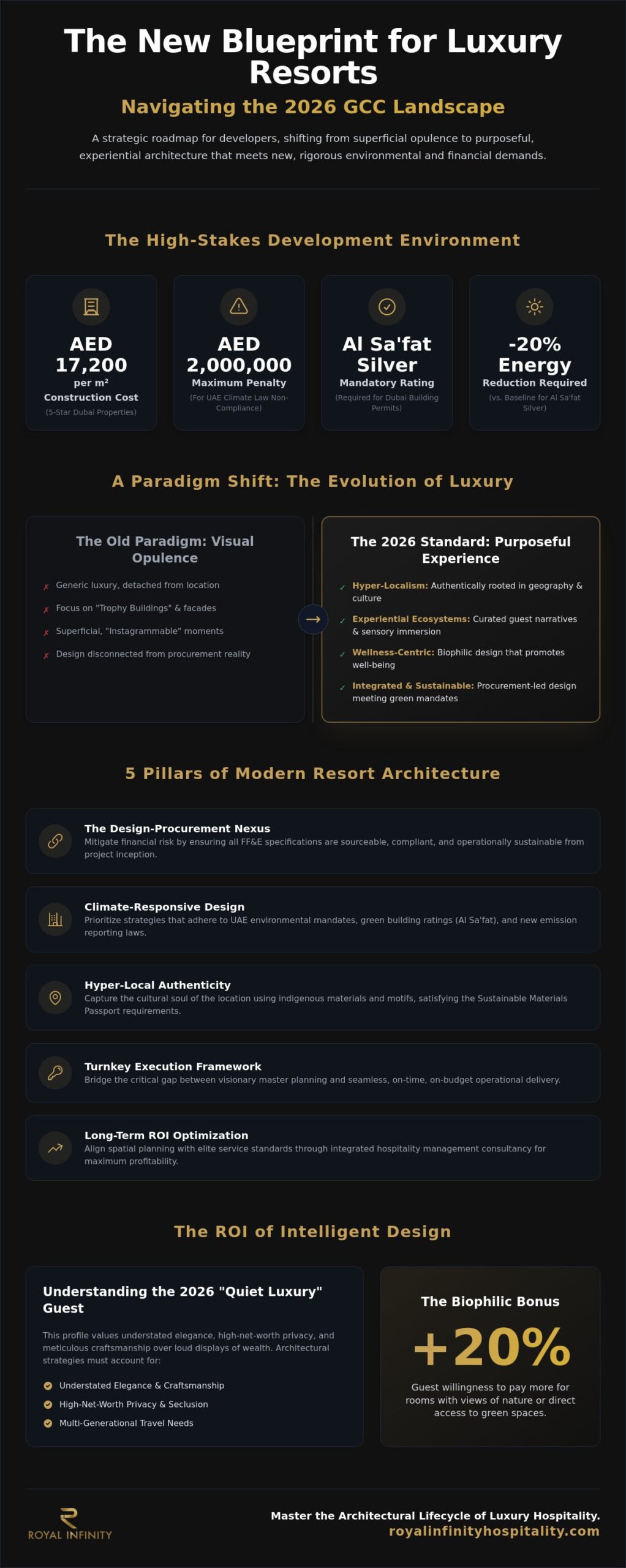
With construction costs for five-star properties in Dubai reaching up to AED 17,200 per square meter, can your project afford the traditional disconnect between a visionary concept and its physical procurement? In 2026, the margin for error has vanished as the UAE Federal Climate Law now mandates strict emission reporting; penalties for non-compliance can reach a significant AED 2,000,000. You recognize that the most breathtaking architectural design for luxury resorts is ultimately hollow if it cannot navigate the complexities of global supply chains or meet the mandatory Al Sa’fat Silver rating required for building permits. It’s a common frustration to see world-class ambitions stalled by unsourceable materials or a failure to align with the GCC’s increasingly rigorous environmental standards.
This article provides a strategic roadmap to mastering these complexities by bridging the gap between artistic vision and operational procurement excellence. You’ll learn how to safeguard your investment through a turnkey methodology that prioritizes both aesthetic brilliance and meticulous financial efficiency. We will examine the essential shift toward procurement-led design strategies that ensure your resort meets the new Dubai Sustainable Materials Passport requirements while delivering an iconic guest experience that maximizes long-term ROI.
Key Takeaways
- Transition from traditional opulence to purposeful, experiential architecture that authentically captures the cultural soul and geographical essence of its specific location.
- Mitigate significant financial risks by mastering the Design-Procurement Nexus, ensuring that all FF&E specifications are both sourceable and operationally sustainable from the project’s inception.
- Implement elite architectural design for luxury resorts that prioritizes climate-responsive strategies and maintains strict adherence to the latest UAE environmental mandates and green building ratings.
- Navigate the complexities of the development lifecycle with a turnkey execution framework that bridges the gap between visionary master planning and seamless operational delivery.
- Optimize long-term ROI and brand positioning through integrated hospitality management consultancy, ensuring that spatial planning aligns perfectly with elite service standards.
The Evolution of Architectural Design for Luxury Resorts in 2026
The definition of high-end hospitality has undergone a profound transformation. In 2026, the industry has moved decisively away from superficial opulence toward purposeful and experiential architecture. This shift reflects a sophisticated understanding that today’s elite traveler seeks more than a visual landmark; they demand an ecosystem that resonates with their personal values and emotional well-being. Modern architectural design for luxury resorts now prioritizes the creation of spaces that facilitate meaningful connection, moving beyond the “Instagrammable” facade to deliver profound sensory immersion. It’s a strategic evolution where the physical structure serves as a silent facilitator of a curated guest narrative.
Hyper-localism has emerged as a critical strategic pillar for developers. It’s no longer sufficient for a Resort hotel to offer a generic luxury experience that could exist anywhere from the Maldives to Monaco. Instead, the design must reflect the soul of its specific geography, utilizing indigenous materials and modern interpretations of traditional Middle Eastern motifs to root the structure in its context. This approach is not merely aesthetic; it’s a pragmatic response to the Sustainable Materials Passport requirements now mandatory for new building permits in Dubai, which prioritize locally sourced materials and lower embodied carbon data.
The regulatory environment in the UAE has codified this evolution into law. With the May 30, 2026 deadline for full compliance with Federal Decree-Law No. 11 of 2024, every developer must now measure, report, and reduce greenhouse gas emissions. Architecture has transitioned from passive sustainability to regenerative practices that actively contribute to the local environment. Integrating AI-driven guest experiences directly into the physical structure has also become standard. These systems optimize climate control and lighting based on real-time occupancy and guest preferences, ensuring operational efficiency without compromising the sense of effortless comfort that defines the luxury sector.
From Visual Landmarks to Experiential Ecosystems
The era of the “trophy building” is being replaced by wellness-centric architecture. Biophilic design is now a non-negotiable standard, as guests are often willing to pay up to 20% more for rooms with views of nature or direct access to green spaces. Spatial planning has also evolved to support the Slow Travel movement. Resorts are now designed with flexible, multi-use areas that accommodate longer guest stays, blending residential-style privacy with elite hospitality services to create a home-away-from-home atmosphere.
The 2026 Luxury Guest Profile
Understanding the shift toward “Quiet Luxury” is essential for successful project delivery. This profile values understated elegance, high-net-worth privacy, and meticulous craftsmanship over loud displays of wealth. Architectural strategies must now account for multi-generational travel, requiring modular layouts that offer communal gathering spots alongside secluded private quarters. This precision in architectural design for luxury resorts directly influences guest loyalty and reinforces a brand’s identity as an authoritative guardian of the guest experience.
Strategic Pillars of High-End Resort Architecture in the GCC
The GCC region demands a specialized approach to architectural design for luxury resorts, where aesthetic grandeur must coexist with extreme environmental resilience. Success in this market isn’t just about visual impact; it’s about navigating a complex matrix of cultural heritage and rigorous regulatory frameworks. In Dubai, achieving the mandatory Al Sa’fat Silver rating requires a 20% energy reduction compared to traditional baselines, making efficiency a core design driver rather than an optional extra. Stakeholders must account for these mandates early in the conceptual phase to avoid costly late-stage revisions.
Saudi Arabia’s giga-projects, such as NEOM and The Red Sea Project, are currently redefining global benchmarks for regenerative tourism. With investment requirements for five-star properties in the Kingdom reaching up to SAR 17,000 per square meter, the pressure to deliver world-class innovation is immense. These projects prove that luxury can be synonymous with absolute sustainability, forcing the entire region to elevate its standards. For developers seeking to navigate these high-stakes environments, engaging an expert design architectural consultancy is often the difference between a compliant asset and a market-leading icon.
Compliance is no longer a voluntary choice but a fundamental gatekeeper for project viability. As of 2026, the regulatory landscape has become significantly more stringent:
- Dubai: Mandatory Al Sa’fat 2.0 Silver rating and the submission of a Sustainable Materials Passport for all new permits.
- Abu Dhabi: A minimum 1 Pearl Estidama rating is required for every new commercial building permit.
- Saudi Arabia: Strict adherence to the latest Saudi Building Code (SBC) alongside bespoke sustainability mandates for giga-project zones.
Passive Cooling and Sustainable Facades
Modern facades in the Middle East must do more than just look impressive. They must manage intense solar gain while preserving the panoramic views that guests expect. We’re seeing a sophisticated return to traditional wind-catcher logic, reimagined through high-tech ventilation systems that reduce reliance on mechanical cooling. Thermal mass in desert resort architecture acts as a structural battery that absorbs solar radiation during the day and releases it during the cooler evening hours to stabilize internal temperatures. By utilizing advanced glazing and high-performance insulation, architects can maintain the glass-heavy aesthetics of modern luxury while meeting strict energy codes.
Spatial Logic for GCC Hospitality
Designing for the Middle Eastern market requires a deep understanding of local social structures. Privacy is paramount, leading to the creation of secluded villa enclaves and the integration of majlis-inspired social spaces that allow for dignified, culturally aligned gatherings. This spatial logic must balance international brand standards with these local expectations to ensure guest comfort. Reference materials like A Complete Guide to Hotel Designs emphasize that layout and furniture placement are fundamental to the guest journey. In arid environments, the “Oasis” concept creates a sense of respite that is essential for architectural design for luxury resorts in the region, blending lush greenery with stone and water to lower ambient temperatures naturally.
Harmonising Aesthetics with Operational Efficiency: The Design-Procurement Nexus
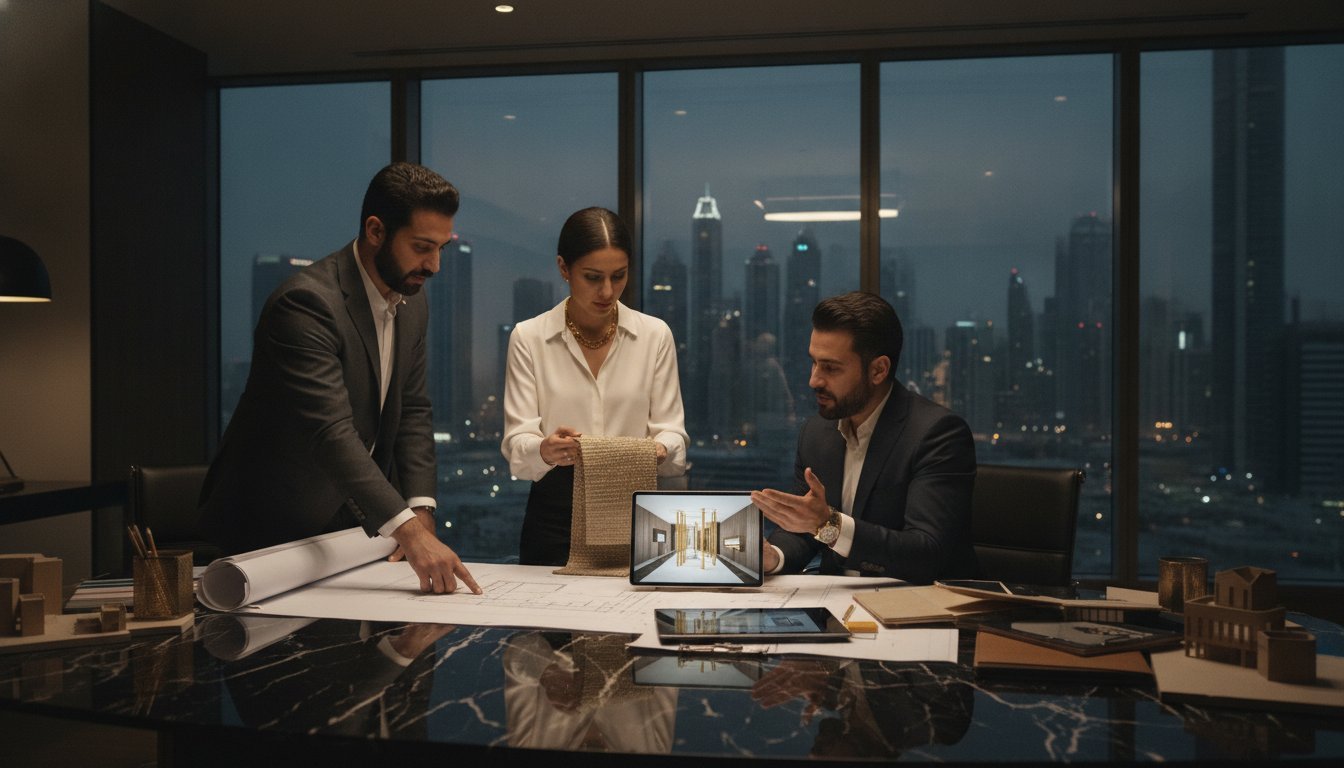
The most pervasive failure in high-end development remains the disconnect between the architect’s studio and the procurement office. While the aesthetic allure of architectural design for luxury resorts is what captures the initial investment, it’s the operational efficiency and sourceability of the design that ultimately dictates the project’s long-term viability. A visionary concept that ignores the realities of the global supply chain often leads to devastating cost overruns and delays that can erode the projected ROI of even the most prestigious UAE developments. Bridging this gap requires a fundamental shift in perspective, where procurement is not an afterthought but a primary driver of the design process.
Integrating Furniture, Fixtures & Equipment (FF&E) and Operating Supplies & Equipment (OS&E) into the architectural conversation from the initial briefing phase is essential for maintaining brand standards. When back-of-house logistics are designed in tandem with front-of-house excellence, the result is a seamless environment where elite service can be delivered without friction. Value engineering, in this context, is not about compromising luxury; it’s a sophisticated methodology used to optimize the procurement budget by identifying high-performance alternatives that offer the same aesthetic impact with greater durability and lower maintenance requirements.
Design vs. Reality: The Procurement Gap
Many projects suffer from “unbuildable” designs that feature bespoke elements with lead times or material requirements that are incompatible with aggressive 2026 delivery schedules. A “Sourcing-First” design philosophy mitigates this risk by verifying the availability of specialized materials before they are codified into the final plans. Royal Infinity Hospitality Management LLC serves as the indispensable link in this process, ensuring that every line on the architect’s sketch corresponds to a tangible, sourceable, and high-quality product. This integrated approach transforms architectural design for luxury resorts from a theoretical exercise into a deliverable reality, providing stakeholders with the security of a turnkey solution.
Strategic FF&E Management
Selecting materials for a five-star resort requires a balance between high-end sophistication and the rigorous demands of a high-traffic environment. Bespoke furniture pieces must be designed not only for their visual contribution but also for the logistics of installation and the ease of future replacement. Procurement-led design is a strategic risk-mitigation framework that synchronizes architectural aspirations with real-world material availability and logistics to guarantee a seamless project handover. By accounting for the physical journey of every piece of equipment from the factory to the resort floor, developers can avoid the logistical bottlenecks that frequently plague complex hospitality projects in the Middle East.
Navigating the Lifecycle: From Conceptual Vision to Turnkey Execution
The journey from a visionary blueprint to a high-performing hospitality asset requires a methodical, multi-phased progression that transcends traditional construction timelines. Successful architectural design for luxury resorts is not a static achievement but a dynamic lifecycle that must be managed with absolute precision. By anchoring the project in a rigorous feasibility study during Phase 1, stakeholders ensure the initial vision is a financially viable asset that aligns with current market realities. Phase 2 moves into schematic design and master planning, where the “Big Picture” is codified to ensure spatial logic supports both guest flow and elite service standards. It’s during these early stages that the project’s DNA is established, setting the foundation for every subsequent decision.
As the project matures into Phase 3, the integration of detailed design with procurement becomes the primary focus. This is where FF&E and OS&E specifications are finalized, ensuring that every material choice is both aesthetically superior and logistically feasible. Phase 4 shifts into project management and fit-out, a stage where the vision is executed to the millimeter under the watchful eye of technical experts. The lifecycle concludes with Phase 5, operational readiness and handover, marking the transition from a construction site to a guest-ready sanctuary. This comprehensive framework ensures that no detail is overlooked, from the initial sketch to the moment the first guest arrives.
The Role of the Hospitality Consultant
In the complex environment of multi-stakeholder resort developments, a specialized project manager acts as the guardian of the “Golden Thread” of design intent. They ensure that the original architectural vision isn’t diluted by the competing interests of various contractors or the pressures of the construction schedule. Turnkey solutions are particularly effective in this regard, as they eliminate the friction between disparate entities by centralizing accountability. This unified oversight guarantees that the finished product is a faithful realization of the brand’s promise, delivered with the composed elegance that high-net-worth investors expect.
Risk Management in Resort Delivery
Proactive risk management is essential for avoiding the supply chain bottlenecks that can jeopardize a grand opening. Identifying these constraints early allows for the development of alternative sourcing strategies that maintain brand standards without compromising the schedule. Ensuring compliance across every architectural detail requires a steady hand and a deep understanding of local regulations. To safeguard your investment, it’s vital to implement a robust hospitality procurement risk management strategy that accounts for the volatility of global logistics. This level of foresight is what separates market-leading icons from projects plagued by delays. For developers ready to secure their project’s future, engaging a partner for hospitality project management is the most reliable path to a seamless handover.
Royal Infinity: Mastering the Architectural Lifecycle of Luxury Hospitality
Royal Infinity Hospitality Management LLC operates as the indispensable bridge between visionary intent and operational reality. We understand that the most sophisticated architectural design for luxury resorts requires a partner who can navigate the intricate balance of elite aesthetics and pragmatic business logic. By integrating elite architectural consultancy with world-class procurement, our firm provides a steady hand for stakeholders managing complex, high-stakes investments. Our approach isn’t merely about delivering a building; it’s about protecting the “Golden Thread” of the project from the first sketch to the final guest check-in.
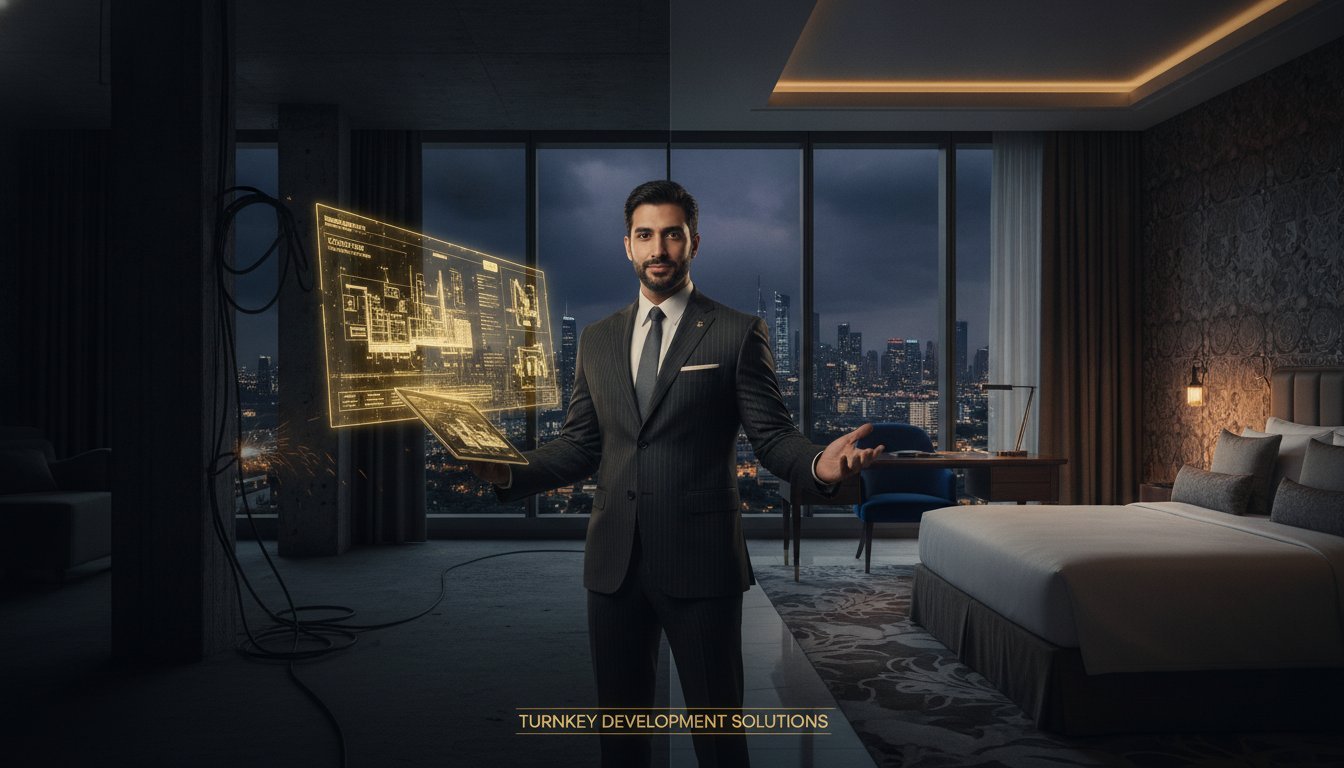
Our turnkey solutions are specifically engineered to protect the investor’s vision while simultaneously safeguarding the project’s bottom line. This methodology ensures that every design choice is vetted for its procurement feasibility, preventing the costly overruns that often occur when architectural “art” meets the reality of the global supply chain. Royal Infinity Hospitality Management LLC brings a “Big Picture” mentality to every engagement, whether we’re developing boutique hotel solutions or managing the master planning of a large-scale resort. This comprehensive oversight allows us to set the standard for excellence in the GCC region, meeting global benchmarks with deep local expertise.
Comprehensive Design Architectural Consultancy
Our consultancy services are characterized by a commitment to curating bespoke architectural solutions that resonate with unique brand identities. We don’t believe in standardized luxury; instead, Royal Infinity Hospitality Management LLC works as a visionary strategic partner to ensure that every structure reflects the soul of its geography and the expectations of the 2026 luxury guest. This commitment extends to ethical responsibility and sustainable luxury governance, ensuring that every project meets the rigorous UAE Federal Climate Law standards. By acting as a guardian of the client’s vision, we ensure that the architectural integrity remains intact through every phase of the development lifecycle.
From FF&E Sourcing to Final Handover
The transition from a conceptual vision to a physical fit-out is where our mastery of Furniture, Fixtures & Equipment (FF&E) becomes critical. Royal Infinity Hospitality Management LLC manages the logistics of luxury with a precision that ensures every bespoke piece is sourced, delivered, and installed to the highest possible standard. Beyond the physical structure, our hospitality management consultancy provides the strategic foresight necessary for long-term operational success, ensuring that the spatial planning aligns perfectly with elite service requirements. This holistic approach guarantees a seamless handover and a guest-ready asset from day one. To secure the future of your development, Partner with Royal Infinity Hospitality Management LLC for your next luxury resort project and experience the confidence of absolute project mastery.
Securing the Future of Elite Hospitality Assets
Mastering the architectural design for luxury resorts in 2026 demands a holistic perspective that transcends mere aesthetics; it requires the seamless integration of visionary master planning with pragmatic procurement logic. The most successful developments are those that bridge the gap between architectural intent and operational reality, ensuring that every design element is both culturally resonant and logistically sourceable. By prioritizing climate-responsive strategies and strict regulatory compliance, stakeholders can protect their investments against the complexities of the modern Middle Eastern market while delivering a world-class guest experience.
Royal Infinity stands as a seasoned guardian of your vision, offering specialized expertise in the UAE and GCC hospitality sectors to navigate these high-stakes environments with composed elegance. We provide comprehensive turnkey solutions that manage the entire lifecycle from initial concept to final OS&E handover, catering to both boutique hotel solutions and large-scale resort developments. Our “Big Picture” mentality ensures that your project remains financially efficient without compromising its elite status. Discover our Strategic Architectural and Procurement Solutions to begin your journey toward a world-class hospitality icon. Your vision deserves the precision of an established industry leader.
Frequently Asked Questions
What are the key trends in architectural design for luxury resorts in 2026?
The primary trends in 2026 emphasize regenerative architecture that actively contributes to the local ecosystem rather than just minimizing harm. We see a significant rise in hyper-localism, where architectural design for luxury resorts utilizes indigenous materials to comply with Dubai’s Sustainable Materials Passport requirements. Additionally, the integration of AI-driven climate systems is now standard to manage real-time energy loads and ensure compliance with strict UAE federal emission laws.
How does architectural design impact a resort’s operational efficiency?
Architectural decisions dictate long-term operational costs by determining staff transit routes and MEP integration. Efficient back-of-house spatial planning reduces service friction and improves delivery speeds to guest suites. When architects prioritize high-performance facades and passive cooling logic from the conceptual phase, the property benefits from significantly lower utility expenses and reduced maintenance cycles throughout its entire operational lifecycle.
Why is procurement consultancy important during the architectural design phase?
Procurement consultancy serves as a vital financial safeguard by verifying that the architect’s specified materials are available within the project’s timeline and budget. This early alignment prevents the “unbuildable design” trap where bespoke elements cannot be sourced or delivered to the UAE. It helps developers navigate the 5% to 7% cost inflation currently impacting high-end hospitality by identifying high-quality, sourceable alternatives before construction begins.
What is the difference between FF&E and OS&E in resort design?
FF&E refers to Furniture, Fixtures, and Equipment, which includes semi-permanent items like bespoke headboards, decorative lighting, and specialized seating. OS&E stands for Operating Supplies and Equipment, encompassing the daily essentials required for guest service, such as linens, silver service, and uniforms. While FF&E is integrated during the architectural fit-out, OS&E is the final layer of procurement that ensures the property is guest-ready for the grand opening.
How do Middle Eastern climate factors influence luxury resort architecture?
Extreme thermal conditions necessitate a mastery of solar orientation and high-performance glazing to mitigate intense heat gain without sacrificing panoramic views. Architects utilize thermal mass and modern wind-catcher logic to stabilize internal temperatures naturally. These strategies are essential for achieving the mandatory Al Sa’fat Silver rating in Dubai or the Estidama 1 Pearl rating required for new building permits in Abu Dhabi as of 2026.
What are the benefits of a turnkey solution for hotel development?
Turnkey solutions centralize accountability under a single partner, which significantly reduces the friction between architects, contractors, and procurement teams. This unified oversight ensures that the original design intent is maintained through every phase of the construction lifecycle. For investors, this approach provides a more predictable delivery schedule and protects the bottom line by eliminating the communication gaps that typically lead to expensive site variations.
How can we ensure a luxury resort meets international brand standards?
Ensuring compliance requires a rigorous technical audit of every architectural detail against the specific global guidelines of the chosen operator. Engaging a specialized hospitality management consultancy helps bridge the gap between local building codes and exacting international requirements. This expert oversight ensures that the resort’s physical layout and architectural design for luxury resorts fully support the elite service standards expected by high-net-worth travelers.
What role does sustainability play in modern resort architectural design?
Sustainability has transitioned from a voluntary marketing choice to a mandatory regulatory requirement across the GCC. In 2026, all projects must prioritize carbon reduction and waste management to comply with Federal Decree-Law No. 11 of 2024. Beyond simple compliance, sustainable practices enhance the asset’s long-term market value by appealing to eco-conscious guests who increasingly seek out properties with verified green building credentials and regenerative footprints.
Related Posts